

What is a trademark?


Why is trademark protection important?
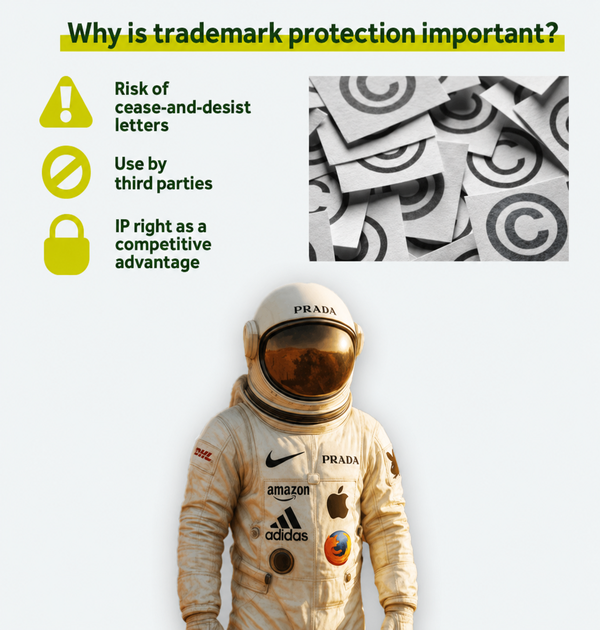
Trademark protection allows companies to secure their trademark rights and take action against unauthorized use by third parties. Without trademark protection, companies run the risk that competitors will use similar or identical marks, which can lead to confusion. This could not only damage the brand’s reputation but also result in a loss of revenue.
With comprehensive trademark protection, companies can ensure that they have exclusive use of their trademark and can protect it from imitators and infringements. A registered trademark grants the owner the exclusive right to use the trademark and enables the owner to take legal action against unauthorized use by third parties.
What types of trademark protection are there?
Trademark protection can be obtained in various ways. The three most common forms of trademark protection are:
- Trademark registration: The most common and reliable method of obtaining trademark protection is to register the trademark with the German Patent and Trademark Office (DPMA). Once successfully registered, the trademark is protected for an initial period of ten years, and this protection can be renewed as many times as desired.
- Acquired Rights Through Use: In certain cases, trademark protection can also be acquired without registration if the mark has gained significant recognition through intensive use in commercial transactions. However, this protection is more difficult to prove and generally offers less certainty than a registered trademark.
- General recognition: In exceptional cases, a mark may enjoy trademark protection based on its general recognition, even if it is not registered. This applies primarily to globally recognized trademarks such as Coca-Cola or Apple.
How do you obtain formal protection?
The process of obtaining trademark protection typically begins with filing a trademark application with the DPMA. Here is an overview of the steps:
- Trademark Search: Before filing the application, a comprehensive trademark search should be conducted to ensure that no existing third-party rights are infringed. A thorough search can prevent conflicts and costly legal disputes.
- Trademark Applicattrademion: Following the search, the trademark application is filed. This requires providing all essential information about the trademark, including the name or symbol to be protected, as well as the goods and services for which protection is sought.
- Examination by the DPMA: After filing, the DPMA examines whether the trademark meets the legal requirements. In particular, it assesses whether the mark possesses the necessary distinctiveness. It does not examine whether prior trademark rights are infringed.
- Registration and Publication: If all requirements are met, the trademark is entered into the trademark register and published. Legal trademark protection takes effect upon registration, retroactively from the date of filing.
How long is a trademark protected?
Trademark protection begins when the trademark is entered in the registry and is initially valid for ten years. This period may be renewed an unlimited number of times for additional ten-year terms, provided that the applicable renewal fees are paid on time. It is therefore advisable to consider renewal well in advance of the expiration of the protection period in order to maintain trademark protection.

What can be covered by trademark protection?
Under trademark protection, various types of marks can be protected. These include:
- Word marks: Trademarks consisting of words, letters, or numbers. Examples include company names, product names, or slogans.
- Figurative marks: Logos, symbols, or graphic elements used to identify products or services.
- Color marks: Certain color combinations can also be protected under trademark law if they possess sufficient distinctiveness.
- Sound marks: Melodies or specific sounds can also be registered as trademarks, provided they serve to identify products or services.
- Holograms and multimedia marks: With advances in technology, three-dimensional marks or multimedia elements can also be protected under trademark law.
How can you protect your brand?
Once a trademark is registered, the trademark owner should actively work to protect it from infringement. This includes, in particular:
- Trademark monitoring: It is advisable to regularly check whether other companies are using similar or identical marks. This can be done through specialized monitoring services or through in-house research.
- Enforcement of rights: If a trademark infringement is detected, the owner should take legal action immediately. This can be done through a cease-and-desist letter, a preliminary injunction, or a lawsuit.
- Use of the trademark: To maintain trademark protection, the trademark must actually be used. In Germany, trademark protection can be revoked if the trademark is not used within five years of registration.
International Trademark Protection: How Can You Protect Your Trademark Worldwide?
If you want to protect your trademark not only in Germany but also internationally, you have several options:
- EU Trademark: An EU trademark provides protection in all member states of the European Union. It can be registered with the European Union Intellectual Property Office (EUIPO).
- International Registration (WIPO): Through the World Intellectual Property Organization (WIPO), you can register your trademark in multiple countries simultaneously. This is done through the so-called Madrid System, which simplifies the registration process in many countries.
- National Trademark Applications: Alternatively, trademarks can also be registered directly in individual countries if only certain countries are of interest.
Conclusion: The Value of Trademark Protection
Trademark protection is an essential component of business success. It not only protects a company’s intellectual property but also strengthens its market position and prevents third parties from misusing the trademark. Trademark registration, combined with ongoing monitoring and enforcement of rights, is therefore an indispensable measure for any company that wants to achieve long-term success.
By adopting the right trademark protection strategy and making targeted use of existing protective mechanisms, companies can secure their brand value over the long term and solidify their competitive position. A well-thought-out trademark protection strategy thus pays off not only from a legal standpoint but also contributes to increasing the company’s value.