
COMPETITION LAW | HEALTH CLAIMS
Health Claims Regulation Lawyer: What You Can Say About Your Product in Germany
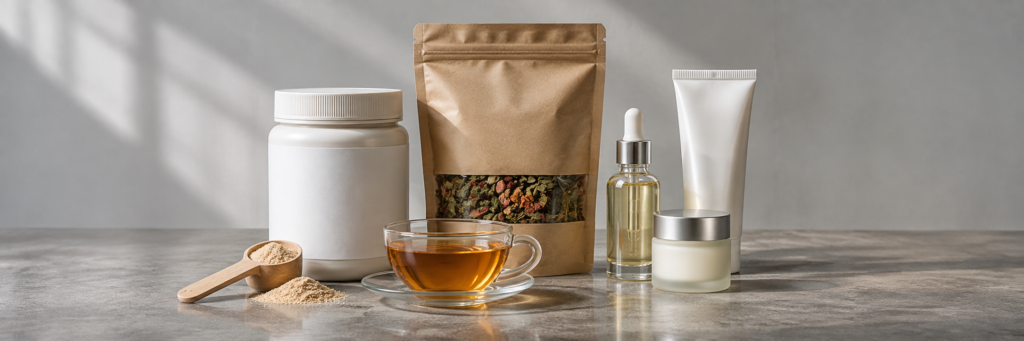
Do you sell dietary supplements, tea, syrup, cosmetics, or sports nutrition on TikTok, Instagram, or in your own store? We review labels, product descriptions, and partnerships before launch and represent you in dealings with competitors, regulatory agencies, and in court.
REHKATSCH LAWYERS | Cologne | Berlin | Nationwide
THE MOST IMPORTANT THING FIRST
One sentence on the label could end up costing you dearly
When it comes to food, a strict rule applies: Anyone who advertises a health benefit must have explicit authorization to do so. “Boosts your immune system,” “for radiant skin from the inside out,” or “kicks your metabolism into gear” may sound like harmless marketing. Legally, however, these are health claims, and without the appropriate authorization, they are simply prohibited. This is regulated by the Health Claims Regulation, or HCVO for short (Regulation (EC) No. 1924/2006).
This doesn’t just affect large manufacturers. It’s especially the many small brands, creators with their own products, and startups launching their first store that run into trouble because no one has explained the rules to them. The text comes from the manufacturer or the agency; the influencer reposts it; and beneath the product appears an enthusiastic customer review. This constitutes a violation, and the seller is the one who receives the warning.
On this page, we’ll explain in plain language what the HCVO requires, where the typical pitfalls lie, what applies to cosmetics, medical devices, and the German Law on the Advertising of Medicinal Products, and how you can stay on the safe side before your launch. We’re basing this on the current legal precedents through fall 2026.

When it comes to health claims in food advertising, the rule is: Only claims that are expressly approved are permitted. Everything else is prohibited, even if it sounds true.
WHO THIS PAGE IS FOR
For creators, startups, online stores, and brands
We represent companies of all sizes—including, in particular, the many small businesses that are just launching their first product and don’t have a legal department to fall back on.
Creator and Influencer
Do you have your own brand—a tea, a protein supplement, a hair oil, or merchandise—that makes wellness claims? Reels, Stories, and the link in your bio are considered advertising in the legal sense.
Startups and Founders
You’re launching your first product. The label, product descriptions, and launch campaign should all be in order before the first package goes out.
Stores and Retailers
You sell products on your website, on Amazon, or in your social shop. You’re also responsible for any manufacturer descriptions you’ve adopted.
Brands and Manufacturers
You have your formulations and campaigns under control, but you need a solid approval or assistance because a competitor or regulatory agency is asking questions.
SWITCH POSITION
What exactly do you sell?
That determines which law applies to you. And this is exactly where many people get it wrong.
1
Something to eat or drink, including capsules, powders, or shots
Food or dietary supplements. The HCVO applies. That is the focus of this page.
2
A product for the skin, hair, or nails that is applied externally
Cosmetics. Cosmetics legislation (Regulation (EC) No. 1223/2009) applies, along with its rules regarding advertising claims. Health claims are a sensitive issue here.
3
A product intended for medical use, such as a gel, spray, or patch to treat symptoms
This may be a medical device. Medical device regulations and the German Law on the Advertising of Medicines (HWG) apply.
4
Something intended to cure or alleviate illnesses
Then you’ll quickly find yourself dealing with pharmaceutical law. Without approval, marketing is a serious problem, and the HWG prohibits many forms of advertising.
What matters is not the name, but the overall presentation. For example, the Higher Regional Court of Cologne ruled that hemp seed oils intended for ingestion, which were marketed as cosmetics, were misleading (Higher Regional Court of Cologne, judgment of March 27, 2026 – 6 U 113/25). A “cosmetic” label does not automatically turn a food product into a cosmetic. If you’re unsure which category your product falls into, we’ll clarify this before you sell it.
THE CENTRAL STANDARD
Prohibition Subject to Permission
Art. 10 Abs. 1 HCVO
Kapitel IV · Spezielle Bedingungen
§
“Health claims are prohibited unless they comply with the general requirements set forth in Chapter II and the specific requirements set forth in this chapter, are authorized under this Regulation, and are included in the list of authorized claims established pursuant to Articles 13 and 14.”
IN PLAIN LANGUAGE
You may only use health claims that have been expressly authorized by the EU. The authorized claims are listed (for many vitamins and minerals in Regulation (EU) No. 432/2012) and apply to a specific substance under specific conditions. Anything not on the list is prohibited, no matter how plausible it sounds or whether you have a study to back it up. Such a violation also constitutes an anti-competitive practice: Article 10(1) of the Health Claims Regulation (HCVO) is a rule governing market conduct within the meaning of Section 3a of the Unfair Competition Act (UWG) (see, for example, Berlin Regional Court II, judgment of August 14, 2025 – 93 O 69/24). Therefore, competitors and trade associations can issue you a cease-and-desist letter for this.
THE BASICS
What exactly is a health claim?
A health claim is any statement or representation that states, suggests, or even indirectly implies that a food product is related to health (Art. 2, para. 2, no. 5 of the Health Claims Regulation). This definition is intentionally broad. What matters is how it is perceived by an average, reasonably attentive consumer—not what you intended.
Nutrition Facts
Claims regarding nutrients and their content. Only statements listed in the annex to the HCVO are permitted, and only if the content meets the specified conditions.
Examples: “High Protein,” “sugar-free,” “high in fiber”
Health Claims
Health-related claims. Only approved and listed claims that are appropriate for the specific substance are permitted.
Example: “Vitamin C contributes to the normal functioning of the immune system.”
Disease-Related Information
Claims regarding the reduction of a disease risk require their own approval and a mandatory disclosure of other risk factors. A food product is not permitted to cure or alleviate any disease.
Example: “lowers your cholesterol level”
Context is key. The same words may be permitted or prohibited depending on how they are presented. Product names, images, symbols, and hashtags can also constitute claims, as the regulation explicitly covers representations through images, graphic elements, and symbols (Art. 2, para. 2, no. 1 HCVO).
In 2025, the Federal Court of Justice (BGH) clarified that beauty claims are not automatically excluded from the HCVO. Anyone who promises “beautiful skin from within” may also be making a health claim, and claims regarding skin texture and elasticity in connection with collagen products must be assessed on a case-by-case basis (BGH, judgment of Oct. 9, 2025 – I ZR 135/24).
THE PRACTICE
It sounds harmless, but it isn't: six examples
We see these types of phrasing all the time in practice. The examples are taken from recent case law and are reproduced here in our own words.
NOT LIKE THIS
“Collagen Drink for Radiant Skin from the Inside Out”
There are no approved health claims for collagen. The Hamburg Regional Court has prohibited such claims in summary proceedings (Decision of Nov. 6, 2025 – 402 HKO 85/25).
THIS IS HOW IT’S DONE
Only approved claims regarding specific vitamins and minerals contained in the product are permitted, provided they are attributed to the respective substance and only if certain conditions are met, such as: “Vitamin C contributes to normal collagen formation for normal skin function.” The claim must be attributed to the substance, not to the drink (Limburg Regional Court, judgment of May 8, 2026 – 5 O 2/26).
NOT LIKE THIS
“Our Metabolism Booster: Lose Weight, Even Without Exercise”
Statements regarding the duration and extent of weight loss—such as “6 kilograms in 3 months”—are always prohibited in the context of food products (Art. 12(b) HCVO; Limburg Regional Court, op. cit.).
THIS IS HOW IT’S DONE
Only approved claims regarding specific substances, along with the conditions of approval. For glucomannan, there is an approved claim regarding weight loss as part of a low-calorie diet, with specific guidelines on the amount. Omit everything else.
NOT LIKE THIS
“Supports Your Body’s Natural Healing Abilities”
The Higher Regional Court of Cologne has ruled that claims regarding the healing and regenerative effects of dietary supplements are misleading (Judgment of March 27, 2026 – 6 U 113/25).
THIS IS HOW IT’S DONE
Describe objectively what’s in it, how to use it, and what it tastes like. Do not promise any effects that are not approved.
NOT LIKE THIS
Product name “ImmunStark” on the front
A general claim must be accompanied by the appropriate, approved statement in immediate visual proximity. It is not sufficient to place the statement on the back simply because there is space on the front (Federal Court of Justice, advisory opinion of July 31, 2026 – I ZR 91/25).
THIS IS HOW IT’S DONE
Either choose a neutral product name or place the approved statement directly next to the name—for example, the statement regarding the vitamins it contains and the immune system.
NOT LIKE THIS
Customer review: “Since I started taking this, my joint pain is gone!”
Health-related reviews may be considered advertising (Hamburg Regional Court, op. cit.).
THIS IS HOW IT’S DONE
If you display reviews in your shop or stories, review them just as you would your own text. Claims about effectiveness don’t belong in the selection you highlight.
NOT LIKE THIS
“Test Winner” Without an Actual Test
Seals of approval and top rankings require a genuine, independent test. The Berlin II Regional Court and the Hamburg Regional Court have ruled that such claims are misleading.
THIS IS HOW IT’S DONE
Advertise only with seals backed by verifiable, independent testing, including the source and year.
TYPICAL STUMBLING BLOCKS
Where Merchants and Creators Actually Struggle
1
The name and slogan matter
A product name or advertising slogan can also be a claim. In the case of capsules with “Gut” in their name, the Berlin Regional Court II (II) inferred the health-related claim from the advertising as a whole, even though individual terms were not immediately understood by the average consumer (Judgment of Aug. 14, 2025 – 93 O 69/24). What matters is the overall message conveyed by the presentation.
2
Usage instructions can be claims
Even instructions for use fall under the HCVO if they appear to be related to a health-promoting effect. Examples include “Better to take daily than all at once” or “Take sublingually for faster absorption.” Neutral statements such as “one capsule daily with water” remain unproblematic (ECJ, Judgment of Sept. 17, 2026 – C-721/24, paras. 48, 52, 53).
3
Packaging and advertising are two different things
Mandatory statements accompanying a claim must, as a general rule, appear on the label. They do not need to be repeated in written advertising if they appear on the packaging (ECJ, Judgment of Sept. 17, 2026 – C-657/24, Kyberg Pharma; ECJ, Judgment of Sept. 17, 2026 – C-721/24, paras. 79–91). Important: Both decisions concern written advertising. You should not rely on them for Reels, Stories, and videos. And the information must actually appear on the packaging.
4
The risk disclosure must be accurate
If you advertise a reduction in the risk of a disease, you must include a statement indicating that the disease has multiple risk factors and that changing one factor may or may not have an effect. The exact wording is not mandatory, but the information must be accurate, clear, and easy to understand. “Elevated cholesterol levels are a risk factor” is likely not sufficient for this purpose (ECJ, Judgment of Sept. 17, 2026 – C-721/24, paras. 68, 72).
5
A study is not a free pass
A study does not replace marketing authorization. And strict standards also apply to other claims regarding efficacy: The Limburg Regional Court has ruled that studies were insufficient because they did not apply to the specific product, dosage, or target audience of the advertisement (Judgment of May 8, 2026 – 5 O 2/26).
THE THREE MOST COMMON PITFALLS
This is where most people receive warnings
1
General Claims Without a Partner
Terms such as “ImmunStark” are general health claims. These are permissible only if accompanied by an approved specific claim that corresponds in content and is in direct visual context. If the corresponding statement appears only on the back of the package, even though there is space on the front, this is not sufficient (Federal Court of Justice, advisory decision of July 31, 2026 – I ZR 91/25).
2
Plants, Teas, and Extracts
To date, there is still no list of approved claims for so-called botanicals because the procedure has not been completed. In 2025, the European Court of Justice ruled that the bans apply nonetheless (Judgment of April 30, 2025 – C-386/23, Novel Nutriology, EU:C:2025:304). You may only invoke transitional rules if the claim is scientifically substantiated and all specific requirements are met. Therefore, you should describe matcha, ashwagandha, or turmeric rather than attributing specific effects to them.
3
Weight Loss Statistics
Claims regarding the duration and extent of weight loss are always prohibited when it comes to food products. This also applies to claims such as “without exercise and without dieting.” The Limburg Regional Court also rejected the provider’s studies and ordered reimbursement of the costs of the cease-and-desist letter (Judgment of May 8, 2026 – 5 O 2/26).
YOUR PRODUCT, YOUR RULES
An Overview of Our Product Lines
Different regulations apply depending on the product. Here is a quick overview, with links to our in-depth articles.
Dietary Supplements and Sports Nutrition
Capsules, powders, shots, and bars: These are the products most frequently subject to cease-and-desist letters. For protein products, the claim “high protein content” is permitted as a nutrition claim only if at least 20% of the total energy value comes from protein. The Federal Court of Justice (BGH) has referred the question of whether you may also prominently display the number of grams (“14 g protein”) on the package to the European Court of Justice (ECJ) (Decision of Nov. 20, 2025 – I ZR 2/25). Until a decision is reached, this remains a risk.
Tea, Coffee, Matcha, Syrup, and Beverages
Here, terms like “detox,” “detoxifying,” and “boosts the immune system” are used. For plant-based ingredients, there are no approved health claims. A syrup with added vitamin C may only be advertised using the approved claim for vitamin C if the content is accurate. The syrup itself does not “boost” anything. For alcoholic beverages containing more than 1.2% by volume, health claims are completely prohibited (Art. 4, para. 3, HCVO).
Cosmetics and “Beauty from Within”
Cosmetics for external use are subject to cosmetics law and the Unfair Competition Act (UWG). Beauty products intended for ingestion, on the other hand, are considered food products: the Food, Cosmetics, and Medicines Regulation (HCVO) applies here. The distinction is determined by the product’s presentation. The Higher Regional Court of Cologne has ruled that oils intended for ingestion that were marketed as cosmetics were misleading.
Medical Devices and the Law on the Advertising of Medicines
As soon as a product serves a medical purpose or promises a cure, medical device and pharmaceutical laws come into play. The HWG then restricts certain forms of advertising, such as unsubstantiated claims of a cure or efficacy. It is particularly important to review this before launching a campaign.
Hemp and CBD
Hemp and CBD products are a special case because there is significant controversy over whether a product is a food, a cosmetic, or something else. Please contact us before you advertise such products.
MEDICAL DEVICES AND THE MEDICINE ADVERTISING ACT
Law on the Advertising of Medicines: If Your Product Promises More Than a Food Product Is Allowed To
The German Law on the Advertising of Medicines (HWG) applies to the advertising of drugs, medical devices, and other products, procedures, or treatments related to the diagnosis, cure, or alleviation of diseases. It is stricter than general competition law and primarily affects products whose marketing promises a medical benefit: gels and sprays for alleviating symptoms, nasal sprays, joint care products, wound care products, or products for treating hair loss.
There are three typical pitfalls for brands and creators. First: misleading advertising. The HWG prohibits attributing therapeutic efficacy to a product that it does not possess (Section 3 HWG). Second: advertising for unapproved drugs (§ 3a HWG). Anyone who advertises their product as a remedy without it being approved risks more than just a cease-and-desist letter. Third: forms of advertising directed at consumers that the law expressly restricts (§ 11 HWG). This includes, for example, advertising that features statements from third parties, such as letters of thanks and recommendations. This directly affects the enthusiastic customer testimonials that many online stores like to feature on their product pages.
Whether your product is a medical device depends on the intended use you assign to it and how you advertise it. Anyone who markets their product as a remedy “against” a disease is quickly approaching the line. We review the classification and your copy before you go on sale. We’re expanding our in-depth coverage of the HWG into a separate page.

WHO REPRESENTS YOU
By your side for over 20 years
We are a law firm serving startups, creators, brands, and businesses. Our team consists of two specialized attorneys and a well-coordinated back-office staff. If you receive a cease-and-desist letter, a letter from a government agency, or have a question about labeling, you’ll know exactly who to contact right from the start.
20+
Years of experience
5.000+
Cases Handled
REHKATSCH LAWYERS | Cologne | Berlin | Nationwide
RESPONSIBILITY
Who is liable: You, your manufacturer, your agency, or your influencer?
In short: often several parties, and you, as the provider, are most likely to be held liable. In 2025, the Berlin Regional Court II held a provider liable as an accomplice for advertising on third-party websites because she had a decisive influence on the design and content. The provider was also required to demonstrate who was responsible for what (known as the “secondary burden of proof”). She failed to do so and lost the case (Judgment of Aug. 14, 2025 – 93 O 69/24).
In practice, this means: You cannot shift responsibility to the manufacturer, the agency, or the creator if you help design or approve the content.
When you book Creator
– Briefing on permitted and prohibited statements
– Approval prior to publication
– Address indemnification and liability in the contract
– Document everything
If you're a creator yourself
– Never use manufacturer descriptions without verifying them
– Treat your own Reels and Stories like packaging
– Keep an eye on reviews and comments
– Label advertisements as such
For more information on disclosing advertisements and collaborating with brands, visit our page on influencer law.

REHKATSCH LAWYERS
We represent you - against competitors, government agencies, and in court.
Cologne | Berlin | Nationwide
WHEN THINGS GO WRONG
What Happens in the Event of a Violation
Warning Letter
Competitors and organizations—such as consumer groups and the Competition Center—issue cease-and-desist letters. The letter includes a deadline and, in most cases, a pre-drafted cease-and-desist declaration.
Temporary Restraining Order
If you don’t sign, a petition is often filed with the court. The court can issue an order prohibiting you from advertising even before you’ve had a chance to respond.
Administrative Fine and Costs
Violations of a prohibition may result in fines of up to €250,000 per violation, or, alternatively, detention for the company’s management. In addition, there are costs for warnings, attorneys’ fees, and court costs.
Government Agency
State food safety authorities can issue orders and initiate proceedings. We also represent you in dealings with government agencies, both in and out of court.
Learn more on our website:
TESTIMONIALS FROM OUR CLIENTS
What Clients Say About Working With Us


 Trustindex überprüft, ob die Originalquelle der Bewertung Google ist.
 Trustindex überprüft, ob die Originalquelle der Bewertung Google ist.
 Trustindex überprüft, ob die Originalquelle der Bewertung Google ist.
 Trustindex überprüft, ob die Originalquelle der Bewertung Google ist.
 Trustindex überprüft, ob die Originalquelle der Bewertung Google ist.
 Trustindex überprüft, ob die Originalquelle der Bewertung Google ist.
 Trustindex überprüft, ob die Originalquelle der Bewertung Google ist.
 Trustindex überprüft, ob die Originalquelle der Bewertung Google ist.
 Trustindex überprüft, ob die Originalquelle der Bewertung Google ist.
 Trustindex überprüft, ob die Originalquelle der Bewertung Google ist.
REGULATORY AUTHORITY
The Food
Safety Authority stated: "This is now in effect."
Not every complaint is filed in court by a competitor. Often, the state food safety authorities show up at your door or send a letter—with a hearing notice, an inquiry about your products, or an order. And it’s not uncommon for a competitor to be behind it, having reported you to the authorities. We represent you in these proceedings—out of court with the authorities and, if necessary, in court.
Don't reply without thinking it through
Whatever you write to the authorities could be used against you in a future antitrust proceeding. Before you make a statement, you should know what the allegation is and what the consequences of making a statement will be.
Keep an eye on the deadline
Hearings and orders come with deadlines. If you fail to act on them, you’ll lose your room to maneuver. Send us the letter immediately, preferably along with the labels and text in question.
Thinking in Parallel
A proceeding with the regulatory authority and a proceeding initiated by a competitor often run concurrently. We coordinate both so that you don’t put yourself in a difficult position in one proceeding that could negatively affect the other.
Review Appeals
There are legal remedies available against official notices and fines, the form and deadlines for which depend on the state and the specific proceedings. We’ll assess whether it’s worth pursuing a course of action and handle it for you.
BEFORE THE LAUNCH
Your Seven-Step Checklist
Here’s what you need to do before the first product is released or the next campaign launches.
Classify Product
Food, dietary supplement, cosmetic, medical device, or drug? The overall presentation is what matters.
Review Claims
Compare each health claim with the list of approved claims to ensure it is appropriate for the substance and conditions.
Check the label
Required information, notes on claims, name, and front-side design. General claims with a corresponding statement next to them.
Customize Store Descriptions
Product pages, categories, meta descriptions, and marketplace listings. Also review any manufacturer descriptions that have been imported.
Social Media Briefing
Reels, Stories, hashtags, and creator captions. Briefing, approval, and tagging.
A Look at Reviews
Do not highlight claims of effectiveness in customer reviews, and check store reviews regularly.
Document Receipts
File certification documents, studies, approvals, and agreements with the manufacturer and creator.
Don’t write anything that you can’t substantiate or attribute to an approved ingredient. When in doubt, describe the product instead of promising a specific effect.
OUR SERVICES
What We Do for You
We provide advice before the launch, review labels and advertising, and represent you if any issues arise—whether dealing with competitors, industry associations, or government agencies, both in and out of court.
Pre-launch testing
Label, ingredient list, product descriptions, online store, and packaging: We’ll tell you exactly which wording to keep, which to adjust, and which to remove.
Campaigns and Partnerships
Briefings for creators, contracts with agencies and manufacturers, approval processes, and clearance. This ensures your ad is in good standing before it goes live.
Warning letter, cease-and-desist order, official notice
We will investigate the allegation, negotiate an appropriate cease-and-desist agreement, defend you in summary proceedings, and represent you in administrative proceedings before the regulatory authority, all the way through to court.
Taking Action Against Competitors
If a competitor gains market share by making false health claims, we’ll take action on your behalf: a cease-and-desist letter, a preliminary injunction, and a lawsuit.
During a no-obligation initial consultation, we’ll determine whether we can take on your case and what the consultation will cost. An initial consultation starts at €250 plus VAT; a review of labels, contracts, or advertising copy starts at €500 plus VAT.
CURRENT CASE LAW
An Overview of the Most Important Decisions
Case law regarding the HCVO is strict and is becoming increasingly strict. Here are the decisions we most frequently refer to in our consultations. The summaries are written in our own words.
§
EuGH, 17.09.2026 · C-721/24
Vista-Life: Dosage Instructions and Risk Warning
Information regarding frequency of use and administration may constitute claims. The risk warning does not have to be word-for-word, but it must be clear and understandable. In written advertising, it is sufficient to include it on the package.
§
EuGH, 17.09.2026 · C-657/24
Kyberg Pharma: “Lose Weight Healthily”
Written advertising is not considered “labeling.” Mandatory notices do not need to be repeated in the advertisement if they are already included in the labeling.
§
EuGH, 30.04.2025 · C-386/23
Novel Nutriology: Botanicals
The fact that the list for plant-based substances is missing does not nullify the bans. Transitional rules are of limited help.
§
German Federal Court of Justice, July 31, 2026 · I ZR 91/25
Vitamin Candies
General and specific claims need to be directly related visually. The back isn’t enough if there’s space on the front.
§
Supreme Court of Justice, October 9, 2025 · I ZR 135/24
Beauty Claim
Claims about collagen and the skin should be evaluated on a case-by-case basis. Beauty and health are not mutually exclusive.
§
BGH, November 20, 2025 · I ZR 2/25
14 g of protein (Reference to the European Court of Justice)
Can the term “High Protein” be supplemented with the number of grams? The question is pending before the European Court of Justice.
§
Cologne Higher Regional Court, March 27, 2026 · 6 U 113/25
Claims of Healing and Hemp Seed Oils
Claims that dietary supplements can cure or promote regeneration are misleading. Oils intended for oral consumption may not be marketed as cosmetics.
§
LG Berlin II, August 14, 2025 · 93 O 69/24
Gut Care
Product names are taken into account; providers are liable as accomplices for third-party sites; “test winners” without a test are misleading.
§
LG Hamburg, November 6, 2025 · 402 HKO 85/25
Collagen Powder
There are no approved claims for collagen. Customer reviews and test seals are taken into account. See below: Hamburg Higher Regional Court, January 27, 2026 – 3 W 49/25.
§
LG Limburg, May 8, 2026 · 5 O 2/26
Metabolism Booster
Weight claims based on duration and extent are not permitted. Claims apply to the ingredient, not to the product as a whole.
OUR TEAM
Your contacts for this topic
Patrick Rehkatsch
Attorney Specializing in Copyright and Media Law – Founder
Attorney
Specializing in
Copyright and Media Law
Juliette Sarvan de Castro
Attorney Specializing in Copyright and Media Law
Frequently Asked Questions About the Health
Claims Regulation
Only with an approved claim regarding a specific substance—such as “Vitamin C contributes to the normal function of the immune system”—and only if your product meets the requirements, such as having a sufficient concentration. A general claim such as “strengthens your immune system” or a product name like “ImmunStark” requires a corresponding approved claim to appear in close proximity.
Yes. The HCVO applies to commercial communications in labeling, presentation, and advertising (Art. 1, para. 2) and is not limited to any one channel. The European Court of Justice (ECJ) has ruled that mandatory notices do not need to be repeated in advertisements if they appear on the packaging—but this applies only to written advertisements. You should not rely on this for video or social media.
As a rule, that includes you, too. Anyone who helps create, publishes, or reposts content and benefits from it may be held liable as an accomplice. The Berlin Regional Court II ruled accordingly regarding advertising on third-party websites and imposed a secondary burden of proof on the provider. Do not accept any content from the manufacturer without verifying it first, and ensure that indemnification is addressed in the contract.
Cosmetics are not subject to the HCVO, but rather to cosmetics law and the UWG. Health claims are particularly sensitive in this context. And: Based on its packaging, what you ingest is usually a food product, even if it’s labeled “beauty.” We clarify the classification before the sale.
The key factors are the medical purpose the manufacturer assigns to the product and how you advertise it—for example, for the treatment or relief of illnesses. In such cases, medical device regulations and the Law on the Advertising of Medicines apply. If in doubt, we’ll review the classification before you begin sales.
Don’t rush to sign the pre-drafted cease-and-desist letter, and don’t let the deadline pass. Send us the cease-and-desist letter immediately. We’ll review the claim and associated costs, draft a customized statement if necessary, and represent you in summary proceedings and in court. The same applies to letters from food safety authorities.
A study does not replace approval. It will not help you with health claims that have not been approved. For other efficacy claims, a strict standard applies: The study must be applicable to your product, the dosage, and the target audience.
Yes, as long as it’s a food product. There are no approved health claims for plant-based ingredients. Describe the origin, taste, and preparation, but do not promise any effects on health, the immune system, detoxification, or metabolism.
Caution: Health-related reviews may be considered advertising if you display or highlight them in your store or in your advertisements. Review them just as you would your own content.
An initial consultation starts at €250 plus VAT; reviewing labels, contracts, or advertising copy starts at €500 plus VAT. We’ll discuss the specifics of your situation during a no-obligation initial consultation.
Contact
How to Reach Us
Choose the option that works best for you—we’ll get back to you quickly.
Schedule an appointment
Right in our calendar – choose your preferred date
What'sApp
Quick Questions, Quick Answers
Phone
Available directly Mon–Fri
Write to us about what's on your mind