
Your Lawyer for Artifical Intelligence (AI)
Artificial Intelligence from a Copyright Perspective –
Challenges and Prospects
Artificial intelligence (AI) is not only revolutionizing technologies and industries, but is also posing new challenges to traditional copyright law. The ability of AI systems to independently generate content such as text, music, and works of art raises fundamental questions about authorship and the resulting rights. These developments require tailored legal advice to ensure that copyrights can be effectively protected and managed.
Copyright Attribution for AI-Generated Works
Traditional copyright law requires a degree of human creativity for a work to be eligible for protection. AI-generated works created without significant human input therefore often do not qualify for standard copyright protection. The question of who or what is recognized as the author remains unresolved in many legal systems.
Challenges for Copyright Law
Identification of the author: Can an AI be recognized as the author, or does authorship lie with the developers of the AI or with the person operating the AI?
Level of creativity: AI works often achieve a level of complexity and quality similar to human creations. Should works created without human intervention be protected by copyright?
Rights management: The efficient management of rights to AI-generated works is complex, especially when AI systems continuously and autonomously produce content.
Possible Legal Adjustments
In light of technological developments, an adaptation of copyright law may be necessary to address these new realities. The following approaches could help:
Introduction of a “new type of copyright” for AI: Some experts propose creating a special copyright that applies specifically to AI-generated works and offers different levels of protection and usage licenses.
Licenses and usage rights: Implementing clear guidelines for the use of AI-generated content could prevent copyright infringements and facilitate the commercial use of these works.
Transparency requirements: Labeling AI-generated content could contribute to legal clarity and ensure that users are informed about the origin of the content.
Outlook
As technological development progresses, the legal system must find answers to the copyright challenges posed by AI. Proactive legislation and international cooperation will be crucial to ensuring a fair balance between the interests of creators, users, and the public.
Our firm continuously monitors developments in the field of AI and copyright law. As an AI law firm, we offer legal advice and are happy to assist with any questions or challenges arising from the use of AI-generated content.
Current AI cases worldwide
GEMA versus OpenAI:
The AI Legal Battle

Germany’s first major AI copyright dispute: GEMA accuses OpenAI of generating complete, copyrighted song lyrics without a license. During the proceedings at the Munich Regional Court, the presiding judge suggested that key points might be interpreted in GEMA’s favor. (…)
Copyright vs. AI Training:
Billion-$ Settlement
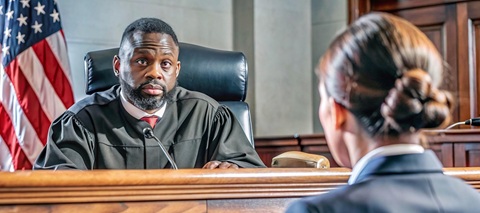
Over $1.5 billion in the largest AI copyright case in the U.S. Authors accuse Anthropic of using copyrighted books without a license—some from illegal sources—for AI training. The court sided with the authors on key points. The settlement sends a clear message to the AI industry. (…)
Japan versus OpenAI:
Sora 2 AI video model

Sora 2 has sparked a nationwide debate in Japan: The AI model generates anime-style videos, some of which bear a striking resemblance to well-known works. The government has issued an official warning to OpenAI and is calling for filters, and licensing models.
ANI versus
OpenAI:
Indian Lawsuit

Several Indian media companies are suing OpenAI over the alleged unauthorized use of journalistic content for AI training. The legal dispute could significantly influence how copyright and artificial intelligence are regulated in India in the future—with implications far beyond the country
There are currently several court cases in the United States dealing with artificial intelligence (AI) and copyright issues. These cases could have significant implications for how AI technologies are used and regulated, particularly with regard to the use of data for training AI systems and the generation of creative content.
A notable case involves GitHub, Microsoft, and OpenAI, in which the plaintiffs allege that their licensed code was used without proper attribution to train GitHub’s AI-powered coding assistant, Copilot. This case raises questions about copyright management and the use of AI to learn from existing copyrighted materials without the express permission of the copyright owners.
Another significant case is directed against OpenAI, where authors Paul Tremblay and Mona Awad, among others, have filed a class-action lawsuit. These authors claim that their copyrighted material was duplicated and used as part of OpenAI’s training data for its language models, which they argue creates derivative works that infringe on their original material. This case touches on the question of whether AI outputs, such as text summaries, can be considered derivative and thus copyright-infringing works.
These cases reflect broader concerns within the technology industry regarding how AI models are trained and the potential copyright implications this may have. They underscore the need for clear guidelines and possibly new legal frameworks to address the unique challenges that AI poses in creative and technical fields.
More detailed information about these legal proceedings will be available on our blog starting in January 2025.
There are currently several court cases in the United States dealing with artificial intelligence (AI) and copyright issues. These cases could have significant implications for how AI technologies are used and regulated, particularly with regard to the use of data for training AI systems and generating creative content.
One notable case involves GitHub, Microsoft, and OpenAI, in which the plaintiffs allege that their licensed code was used without proper attribution to train GitHub’s AI-powered coding assistant, Copilot. This case raises questions about copyright management and the use of AI to learn from existing copyrighted materials without the express permission of the copyright owners.
Another significant case is directed against OpenAI, where authors Paul Tremblay and Mona Awad, among others, have filed a class-action lawsuit. These authors claim that their copyrighted material was duplicated and used as part of OpenAI’s training data for its language models, which they argue creates derivative works that infringe on their original material. This case touches on the question of whether AI outputs, such as text summaries, can be considered derivative and thus copyright-infringing works.
These cases reflect broader concerns within the technology industry regarding how AI models are trained and the potential copyright implications this may have. They underscore the need for clear guidelines and possibly new legal frameworks to address the unique challenges that AI poses in creative and technical fields.
More detailed information about these legal proceedings will be available on our blog starting in January 2025.
AI Regulation:
New EU Rules for AI Systems
What’s important now for businesses, developers, and creatives.
The EU is introducing new standards for AI – with clear guidelines, obligations, and transparency requirements.
- What is the EU’s AI Regulation?
- When does the AI Regulation take effect?
- What does the AI Regulation mean in concrete terms?
AI Regulation:
New EU Rules for AI Systems
What’s important now for businesses, developers, and creatives.
The EU is introducing new standards for AI—with clear guidelines, obligations, and transparency requirements.
AI Advertising Film Production
#USE CASES
Our client, the Berlin-based advertising film production company Andrew Film GmbH, is in the process of transitioning nearly 100% of its production to AI-driven production. Here is some background on the legal challenges …
AI Advertising Film Production
#USE CASES
Our client, the Berlin-based advertising film production company Andrew Film GmbH, is in the process of transitioning nearly 100% of its production to AI-driven production. Here is some background on the legal challenges …