
Deepfake victim?
How to Defend Yourself Effectively—
With a Lawyer by Your Side
Fake videos or images can ruin people’s lives.
Deepfakes often spread across the internet within a matter of hours and can cause massive damage to someone’s reputation, career, or personal life.
However, those affected have legal options to take action against the spread of such content and have it removed quickly.
Highly rated by many clients:

Deepfake victim?
How to Defend Yourself Effectively—
With a Lawyer by Your Side
Fake videos or images can ruin people’s lives.
Deepfakes often spread across the internet within a matter of hours and can cause massive damage to someone’s reputation, career, or personal life.
However, those affected have legal options to take action against the spread of such content and have it removed quickly.
Deepfake victim?
How to Defend Yourself Effectively—
With a Lawyer by Your Side
Fake images or videos can ruin people’s lives.
Deepfakes often spread across the internet in no time at all and can cause massive damage to someone’s reputation, career, or personal life.
However, those affected can take legal action to have the content removed.
Highly rated by many clients:

Definition and How Deepfakes Work
The term "deepfake" refers to content that has been manipulated or entirely generated using artificial intelligence. This involves altering the faces, voices, or movements of real people to create videos, images, or audio recordings that are deceptively realistic.
Modern AI systems analyze large amounts of image and video material to realistically replicate a person’s appearance. This results in content that is virtually indistinguishable from real footage for many viewers.
This becomes particularly problematic when deepfakes are used for defamation, extortion, fraud, or targeted disinformation. In such cases, those affected can take legal action against the dissemination of the content and, under certain circumstances, demand a cease-and-desist order, the removal of the content, or compensation for damages.
Examples of deepfakes include:
- doctored videos of celebrities or private individuals
- Fake interviews or false statements in videos
- manipulated intimate photos or videos
- Voice clones used for fraud attempts or telephone scams
- fake social media videos or posts
- AI-generated images intended to depict real people
The Case of Our Client “Mariam”
A Deepfake Case Study
The case of influencer Mariam illustrates just how quickly deepfakes can have real-world consequences.
Images of her were taken from the internet without her consent and manipulated using artificial intelligence. This resulted in purported nude images, which were subsequently shared across multiple platforms.
The content is no longer available online. However, Mariam has spoken publicly about the incident and describes her experience in the following video.
This case highlights typical problems associated with deepfakes:
- Images are used without permission
- AI creates deceptively realistic manipulated content
- It spreads quickly across multiple platforms
This case illustrates how quickly manipulated content can spread online—and how important it is to take legal action against it at an early stage.
The Case of Our Client “Mariam”
A Deepfake Case Study
The case of influencer Mariam illustrates just how quickly deepfakes can have real-world consequences.
Images of her were taken from the internet without her consent and manipulated using artificial intelligence. This resulted in purported nude images, which were subsequently shared across multiple platforms.
The content is no longer available online. However, Mariam has spoken publicly about the incident and describes her experience in the following video.
This case highlights typical problems associated with deepfakes:
- Images are used without permission
- AI creates deceptively realistic manipulated content
- It spreads quickly across multiple platforms
This case illustrates how quickly manipulated content can spread online—and how important it is to take legal action against it at an early stage.
Legal Challenges Posed by Deepfakes
Deepfakes pose new challenges for the legal system. The technology is evolving rapidly, while legal regulations are often only gradually being adapted.
Both European regulations and national laws play a role in this context. Those affected may already have various legal claims today.
Depending on the specific case, claims may arise in particular from the following areas of law:
Right to privacy
Protection of one's person and image, particularly in cases of manipulated or falsified depictions.
Copyright
When images, videos, or other content are used without permission to create deepfakes.
Data Protection Law
When image, video, or audio data is processed or published without consent.
Criminal Law
For example, in cases of defamation, fraud, extortion, or the deliberate dissemination of false information.
In addition to these existing legal frameworks, new regulations are currently being developed that specifically address the use of AI and deepfakes. These developments are taking place at both the European and national levels.

European regulations
At the European level as well, lawmakers are increasingly addressing the risks posed by artificial intelligence and deepfake technologies. The goal is to promote greater transparency in the use of AI and to limit misuse through manipulated content.
An important step in this direction is the European Union’s AI Act, which establishes a common legal framework for AI systems within the EU for the first time.

National regulations
Under German law, affected individuals can already take action against deepfakes today. Depending on the specific case, claims may arise under privacy law, data protection law, copyright law, or criminal law.
These existing regulations make it possible to take action against the creation or dissemination of manipulated content and to demand its removal or cessation.
The Legal Basis of European Regulations in Detail
At the European level, deepfakes can be particularly relevant from a data protection perspective. When images, videos, or voices of a person are processed, this typically constitutes personal data within the meaning of the GDPR.
Processing such data is only permitted if there is a legal basis under Article 6 of the GDPR, such as the consent of the data subject.
In addition, the European Union’s AI Act contains new regulations governing the use of AI systems, particularly transparency requirements for AI-generated content.
Detailed Legal Basis for National Regulations
Of particular relevance is the right to one’s own image under Sections 22 and 23 of the German Art Copyright Act (KUG). According to these provisions, images of a person may generally only be published or distributed with that person’s consent.
In addition, the general right of personality, which is derived from Articles 1 and 2 of the Basic Law, may also be affected. Among other things, this right protects against distorted portrayals of one’s own person.
Depending on the case, criminal law provisions may also apply, for example in the case of defamatory or particularly personal content.
In short
- Under Art. 35 I lit. k) DSA, AI content must be labeled as such.
- Under Art. 6(1) GDPR, no personal data may be used in the creation of such content or disseminated through it. Under § 22 et seq. KUG, no images may be used or disseminated without the consent of the persons concerned.
- According to Sections 14, 23 UrhG, no copyright-protected material may be used or distributed without consent.
- Deepfakes must not infringe upon the general right of personality of the individuals concerned. The more clearly the editing is recognizable, the less severe the infringement is and the more likely it must be tolerated.
- Deepfakes may be subject to criminal liability, e.g., if they contain defamation under § 187 StGB or false accusations under § 164 StGB.
- Not every law is always applicable; the specific circumstances of each case must always be examined to determine exactly what applies.
Measures Against Deepfakes
Victims don't have to put up with deepfakes. Here's how we take legal action against manipulated content—quickly, systematically, and consistently.
Consideration of legal action
We analyze your specific case and determine exactly what legal claims you are entitled to—such as those arising from privacy rights, data protection laws, or copyright law. In doing so, we also assess the likelihood of success and develop a clear strategy for moving forward.

Legally sound preservation of evidence
We ensure that all relevant content is documented in full and in compliance with legal requirements. This includes screenshots, links, and distribution channels. This way, we ensure that your evidence will actually be admissible in court later on.

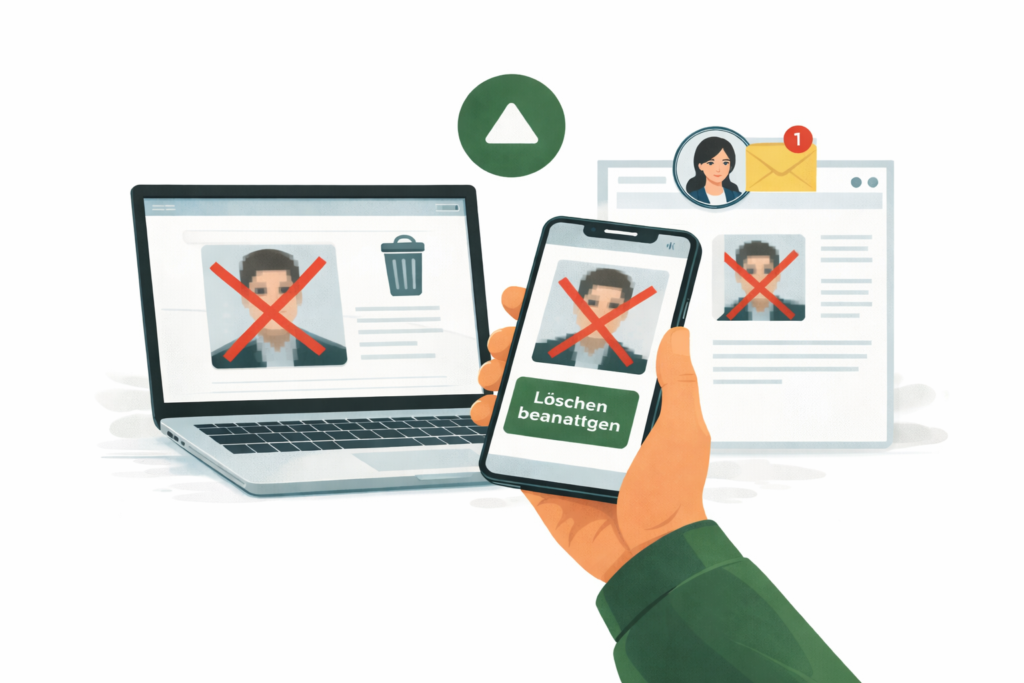
Enforcement of the deletion
We contact platforms, operators, and those responsible directly to have the deepfake content removed quickly. Our goal is to stop its spread immediately and ensure that it is deleted as completely as possible across all relevant channels.
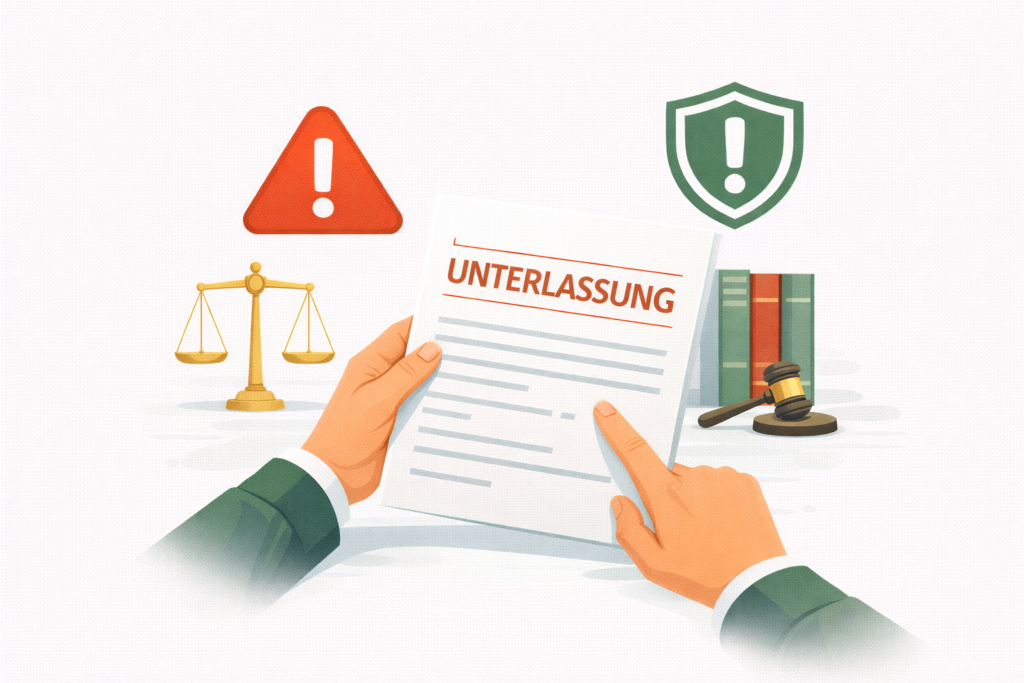
Enforcement of injunctive relief
To prevent the content from reappearing, we consistently enforce cease-and-desist orders. This ensures that further distribution is legally prohibited and that you are protected in the long term.
Claim for Damages
Depending on the circumstances, we may also pursue claims for damages and explore further legal action against those responsible. This ensures that your rights are fully protected.

Conclusion
Deepfakes can cause significant personal and professional harm. Fake images, videos, or voices often spread quickly online, but those affected do not have to put up with such content.
In many cases, there are legal avenues to take action against the dissemination of such content and have it removed. An attorney specializing in media and personality rights can help you assess and enforce your claims.
If YOU are affected by a deepfake, please feel free to contact us. We will support you in effectively protecting your rights.

Conclusion
Deepfakes can cause significant personal and professional harm. Fake images, videos, or voices often spread quickly online, but those affected do not have to put up with such content.
In many cases, there are legal avenues to take action against the dissemination of such content and have it removed. An attorney specializing in media and personality rights can help you assess and enforce your claims.
If YOU are affected by a deepfake, please feel free to contact us. We will support you in effectively protecting your rights.