TikTok is growing rapidly, and with its reach comes increased legal risks, especially copyright infringements on TikTok. Users upload millions of clips every day, including films, series, and short videos for which they do not own the rights. For a long time, TikTok tried to shift responsibility for this as far away from itself as possible.
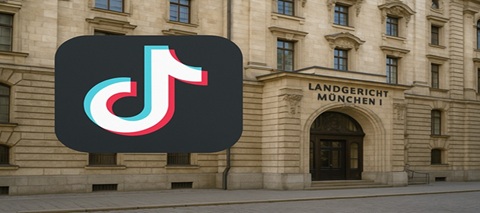
The Munich I Regional Court has now set a clear limit on this practice and sent a signal to the entire industry.
The case: Rights holder offers license – TikTok declines
A Berlin-based media company noticed that several of its short films were circulating on TikTok without permission. Instead of simply demanding their removal, the rights holder actually offered to negotiate the necessary licenses directly with TikTok. For TikTok, this was an easy way to use the content legally.
However, the negotiations were unsuccessful. TikTok responded only fragmentarily to inquiries, did not name any asking prices, and did not submit any concrete counteroffers.
The verdict
The Munich I Regional Court ruled that TikTok is liable for the unauthorized publication of several short films because the platform did not adopt a licensing model offered by the rights holder and thus violated Section 4 (1) No. 1 of the German Copyright Act (UrhDaG). This refers to the law on the copyright liability of service providers for sharing online content (Copyright Service Provider Act – UrhDaG).
Since TikTok did not make “best efforts” to obtain the necessary rights of use, the platform cannot invoke the liability privilege of Section 1 (2) UrhDaG.
The court ordered TikTok to:
- Cessation of further unlicensed use
- Deletion of the affected content
- Information about the scope and extent of use
- Damages pursuant to Section 97(2) of the German Copyright Act (UrhG)
The ruling thus makes it clear that platforms such as TikTok must seriously examine license offers and actively negotiate them—otherwise, they bear full copyright responsibility.
Significance for platforms and rights holders
The ruling clearly shows that copyright infringements on TikTok are being taken more and more seriously. As a result, platforms such as TikTok must actively clarify usage rights as soon as protected content appears on their services. Anyone who ignores a license offer loses the protection of the UrhDaG (German Copyright Act) and is liable for copyright infringements.
For rights holders, this means a noticeable strengthening of their position. Not only can they demand the removal of their works, but they can also demand serious license negotiations and assert comprehensive claims for information and damages in the event of infringements.
Do you need legal assistance? Contact social
media lawyers now.